Sodium and Your Heart: How to Cut Back on Salt in a Salty World
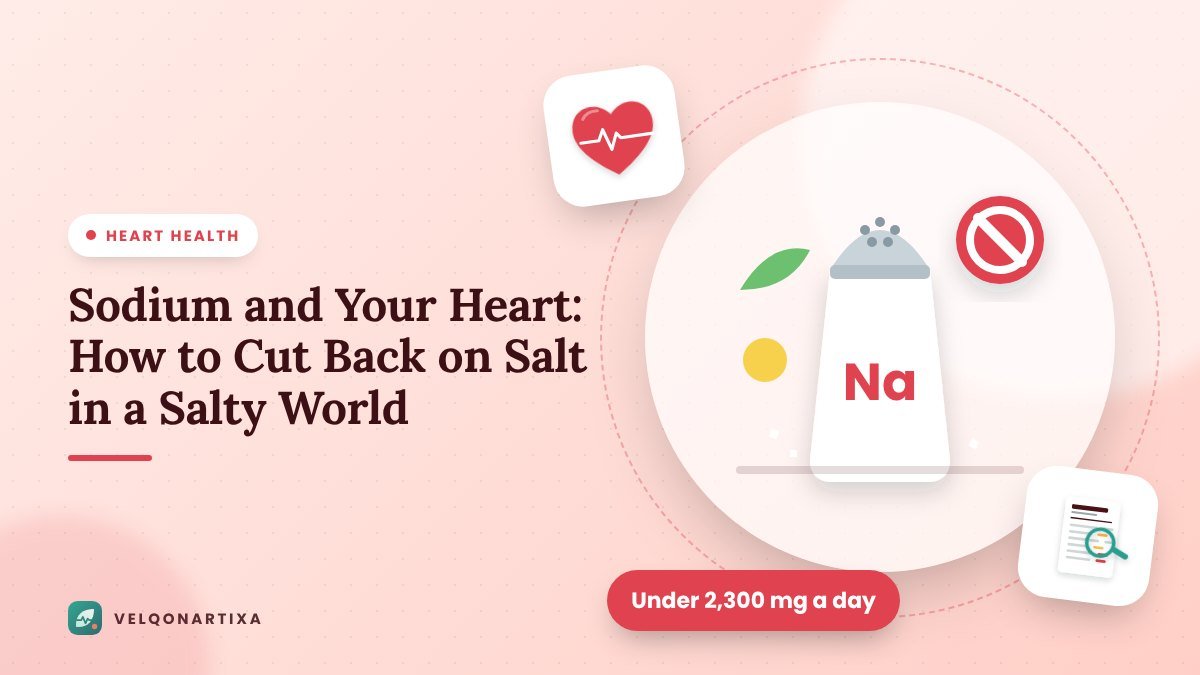
Most Americans eat far more sodium than recommended. Learn where sodium hides, daily limits, how it affects blood pressure, and practical tips to cut back.
Key takeaways
- Americans eat about 3,400 mg of sodium daily on average, well above the recommended limit of 2,300 mg.
- More than 70% of sodium comes from packaged, processed, and restaurant foods, not the salt shaker.
- Too much sodium raises blood pressure, a major risk factor for heart attack and stroke.
- Reading labels, cooking at home, and using herbs and spices are the most effective ways to cut back.
Salt makes food taste good, but most Americans are getting far too much of it. According to the CDC, the average American eats about 3,400 mg of sodium per day, nearly 50% more than the recommended limit. Over time, excess sodium raises blood pressure and increases the risk of heart disease and stroke.
The tricky part? Most of that sodium isn't coming from the salt shaker.
Sodium vs. salt
Table salt is made of sodium and chloride. Sodium is the part that affects blood pressure. One teaspoon of table salt contains about 2,300 mg of sodium, the entire recommended daily limit.
How much sodium should you eat?
| Recommendation | Daily sodium |
|---|---|
| Dietary Guidelines for Americans (ages 14+) | Less than 2,300 mg |
| American Heart Association ideal limit for most adults | 1,500 mg |
The AHA notes that even cutting back by 1,000 mg a day can improve blood pressure and heart health.
How sodium affects your heart
When you eat too much sodium, your body holds onto extra water to dilute it. This increases the volume of blood in your blood vessels, which raises blood pressure. Over time, high blood pressure strains your heart and damages arteries, raising your risk of:
- Heart attack and heart failure
- Stroke
- Kidney disease
Some people are more "salt-sensitive" than others, including older adults, Black Americans, and people with high blood pressure, diabetes, or kidney disease.
Where sodium hides
More than 70% of the sodium Americans eat comes from packaged, processed, and restaurant foods. The CDC lists these among the top sources:
- Breads and rolls
- Pizza
- Sandwiches and burgers
- Cold cuts and cured meats
- Soups
- Burritos and tacos
- Savory snacks (chips, crackers, pretzels)
- Chicken dishes
- Cheese
- Egg dishes and omelets
Foods that don't taste salty, like bread and cereal, can still add up because you eat them often.
How to read labels for sodium
- Check the milligrams of sodium and the % Daily Value on the Nutrition Facts label.
- 5% DV or less per serving is low; 20% DV or more is high.
- Watch the serving size; many people eat two or more servings.
Know what label claims mean:
| Label claim | Meaning |
|---|---|
| Sodium-free | Less than 5 mg per serving |
| Very low sodium | 35 mg or less per serving |
| Low sodium | 140 mg or less per serving |
| Reduced sodium | At least 25% less than the regular product |
| No salt added / unsalted | No salt added during processing (may still contain natural sodium) |
12 practical ways to cut back
At the store
- Choose fresh or frozen vegetables without sauces.
- Buy "no salt added" canned beans and vegetables, or rinse regular canned beans to remove some sodium.
- Compare brands of bread, soup, and sauces; sodium varies widely.
- Limit processed meats like ham, bacon, hot dogs, and deli meat.
At home
- Cook more meals from scratch so you control the salt.
- Season with herbs, spices, garlic, onion, citrus juice, and vinegar.
- Taste food before adding salt at the table.
- Make your own salad dressings and sauces.
- Use salt-free seasoning blends.
When eating out
- Ask for sauces and dressings on the side.
- Choose grilled or steamed dishes over fried, cured, or smoked options.
- Share an entrée or take half home; restaurant portions often contain a full day's sodium.
Your taste buds adapt. After a few weeks of eating less salt, many people find that heavily salted foods taste too salty.
What about salt substitutes?
Many salt substitutes replace some sodium with potassium chloride. These can help lower blood pressure for many people. However, people with kidney disease or who take certain blood pressure or heart medications should talk with their doctor first, as too much potassium can be dangerous for them.
The bottom line
Cutting back on sodium is one of the simplest ways to protect your heart. Focus on reducing packaged and restaurant foods, read labels, and flavor food with herbs and spices. Combine this with the other strategies in our guide to lowering blood pressure for even greater benefits.
Last reviewed and updated: May 16, 2026
This article is for general information only. It isn't medical advice and can't replace a visit with your doctor, pharmacist, or other licensed health professional who knows your history. Read our full medical disclaimer.