Managing Everyday Stress: 12 Science-Backed Techniques That Work
Feeling stressed? Learn how stress affects your body and 12 science-backed techniques, from breathing exercises to movement and boundaries, to manage it.
Key takeaways
- Short-term stress is normal, but chronic stress can affect sleep, blood pressure, digestion, mood, and immunity.
- Slow breathing, physical activity, sleep, and social connection are among the most effective stress relievers.
- Identifying your stressors and setting boundaries helps reduce stress at its source.
- If stress feels overwhelming or lasts for weeks, a health professional can help.
Work deadlines, bills, traffic, family responsibilities, the news cycle: everyday life in America comes with plenty of stress. In the American Psychological Association's annual Stress in America surveys, a large share of adults consistently report that stress affects their physical and mental health.
Some stress is normal and even helpful. It can sharpen focus and help you meet a deadline. But when stress becomes constant, it takes a toll. The good news is that you can learn skills to manage it.
How stress affects your body
When you face a threat or pressure, your body releases hormones like adrenaline and cortisol. Your heart beats faster, your breathing quickens, and your muscles tense. This "fight-or-flight" response is designed to be short-lived.
When stress continues for weeks or months, it can contribute to:
- Headaches and muscle tension
- Trouble sleeping
- Digestive problems
- High blood pressure
- Weakened immune function
- Irritability, anxiety, and low mood
- Unhealthy coping habits, such as overeating, smoking, or drinking more alcohol
12 techniques to manage everyday stress
Calm your body quickly
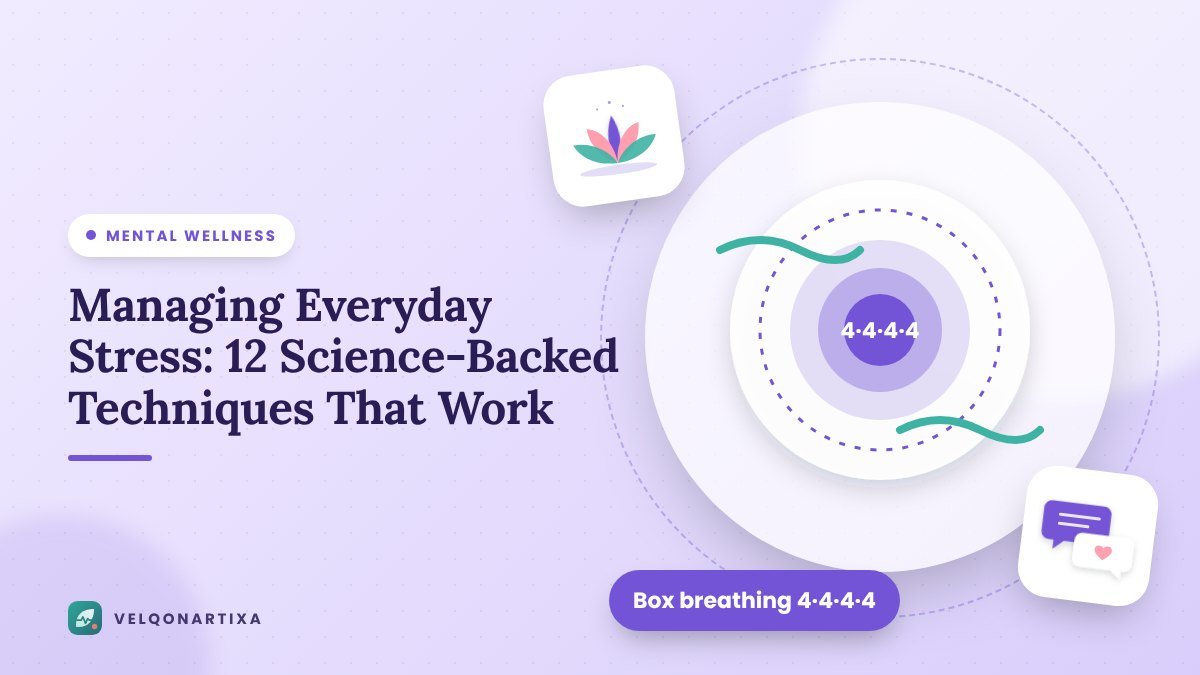
1. Try box breathing. Breathe in for 4 counts, hold for 4, breathe out for 4, hold for 4. Repeat for 2 to 5 minutes. Slow breathing activates the body's relaxation response.
2. Use progressive muscle relaxation. Starting with your feet, tense each muscle group for 5 seconds, then release. Work your way up to your face.
3. Take a movement break. A brisk 10-minute walk can lower tension and improve mood almost immediately.
Build daily resilience
4. Exercise regularly. Physical activity is one of the most effective stress relievers. Aim for the recommended 150 minutes a week.
5. Protect your sleep. Poor sleep makes stress harder to handle, and stress makes sleep harder. Aim for 7 or more hours. See our sleep hygiene guide.
6. Practice mindfulness. Just a few minutes a day of focused attention on the present moment can reduce stress. Try our 5-minute mindfulness practice.
7. Eat regular, balanced meals. Skipping meals and relying on caffeine and sugar can worsen irritability and energy crashes.
8. Limit alcohol and caffeine. Both can disrupt sleep and increase anxiety.
Address the sources of stress
9. Identify your stressors. Keep a stress journal for a week. Note what triggered stress and how you responded. Patterns often emerge.
10. Set boundaries. It's okay to say no to extra commitments. Protect time for rest and things you enjoy.
11. Break big problems into small steps. A to-do list with small, concrete actions makes overwhelming tasks feel manageable.
12. Stay connected. Talking with a trusted friend or family member can provide perspective and comfort. Social support is one of the strongest buffers against stress.
Try the "5-4-3-2-1" grounding exercise when stress spikes: notice 5 things you see, 4 things you can touch, 3 things you hear, 2 things you smell, and 1 thing you taste.
Healthy vs. unhealthy coping
| Healthy coping | Unhealthy coping |
|---|---|
| Exercise, walking, stretching | Drinking more alcohol |
| Talking with someone you trust | Isolating yourself |
| Journaling or creative hobbies | Endless scrolling or binge-watching |
| Deep breathing or meditation | Smoking or vaping |
| Problem-solving and planning | Overeating or skipping meals |
When stress may be something more
Stress usually eases when the situation improves. Talk with your doctor or a mental health professional if:
- Stress lasts for weeks and interferes with work, relationships, or daily life
- You have frequent panic attacks, constant worry, or feel on edge most days
- You feel hopeless, persistently sad, or lose interest in activities
- You're relying on alcohol or drugs to cope
- You have physical symptoms like chest pain (see a doctor right away)
Learn more in our guides on recognizing anxiety and finding a therapist.
If you're in crisis or having thoughts of harming yourself, call or text 988 to reach the 988 Suicide & Crisis Lifeline, available 24/7 in the U.S. In an emergency, call 911.
The bottom line
You can't eliminate stress from life, but you can change how your body and mind respond to it. Start with one or two techniques, such as daily breathing exercises and a short walk, and build from there.
Last reviewed and updated: October 15, 2026
This article is for general information only. It isn't medical advice and can't replace a visit with your doctor, pharmacist, or other licensed health professional who knows your history. Read our full medical disclaimer.