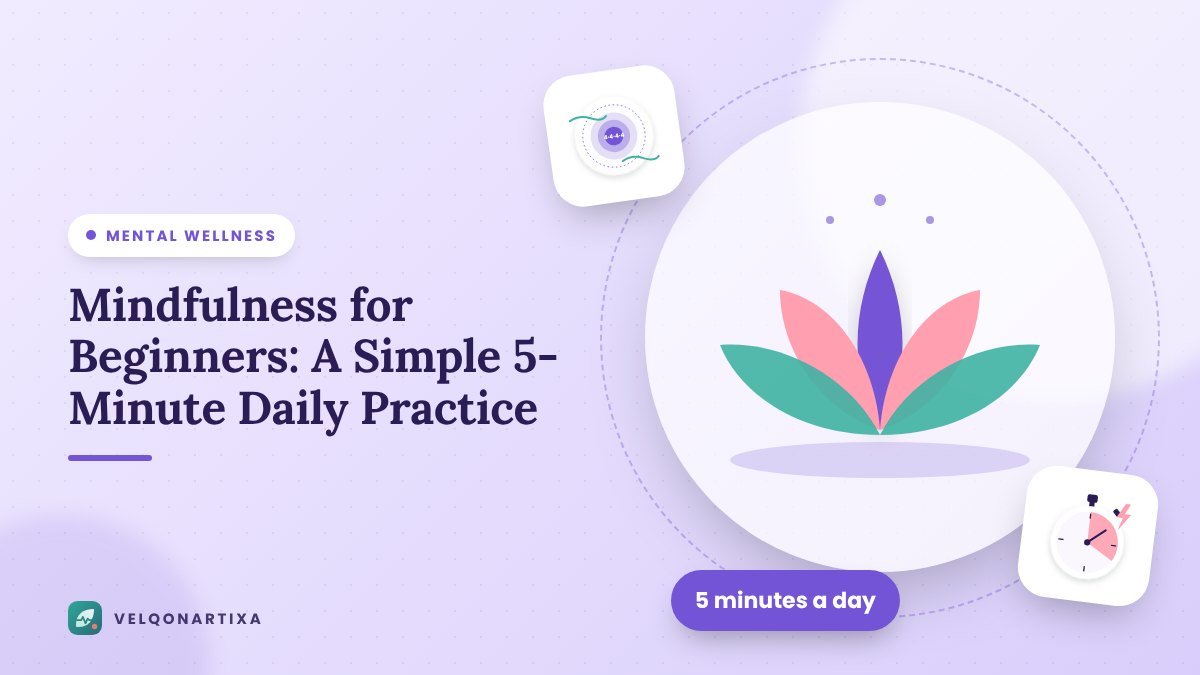
Mindfulness for Beginners: A Simple 5-Minute Daily Practice
New to mindfulness? Learn what it is, what research says about its benefits, and follow a simple 5-minute daily practice you can do anywhere.
Key takeaways
- Mindfulness means paying attention to the present moment on purpose, without judgment.
- Research suggests mindfulness practices may help reduce stress, anxiety, and symptoms of depression for some people.
- You don't need to "clear your mind"; noticing a wandering mind and gently returning is the practice.
- Just 5 minutes a day is a meaningful place to start.
Mindfulness has gone mainstream. Hospitals, schools, and workplaces across the U.S. now offer mindfulness programs. But if you've never tried it, it can sound vague or intimidating. Do you have to sit cross-legged for an hour? Do you need to empty your mind?
Not at all. Mindfulness is a simple skill anyone can learn, and you can start with just five minutes a day.
What is mindfulness?
Mindfulness is the practice of paying attention to the present moment, on purpose, without judgment. It means noticing your thoughts, feelings, body sensations, and surroundings as they are, rather than getting swept away by worries about the future or regrets about the past.
Meditation is one way to practice mindfulness, but you can also be mindful while walking, eating, or washing dishes.
What does research say?
According to the National Center for Complementary and Integrative Health, part of NIH, studies suggest that mindfulness-based programs may help:
- Reduce stress
- Ease symptoms of anxiety and depression for some people
- Improve sleep
- Help people cope with chronic pain
Structured programs such as Mindfulness-Based Stress Reduction (MBSR) and Mindfulness-Based Cognitive Therapy (MBCT) have been studied the most. Research is ongoing, and mindfulness works best as a complement to, not a replacement for, medical or mental health care when it's needed.
Common myths
- "I have to clear my mind." Your mind will wander, and that's normal. Noticing it wandered and gently bringing it back is the practice.
- "I need a lot of time." Even a few minutes can help.
- "It's religious." While mindfulness has roots in Buddhist traditions, modern secular programs are used in medicine and psychology.
- "I'm bad at it." There's no such thing as being bad at mindfulness. Every session is practice.
A simple 5-minute mindfulness practice
Find a quiet spot. Set a timer for 5 minutes so you don't have to watch the clock.
1. Get comfortable (30 seconds). Sit in a chair with your feet flat on the floor and your back upright but relaxed. Rest your hands in your lap. Close your eyes or lower your gaze.
2. Notice your breath (2 minutes). Breathe naturally. Notice the sensation of air entering and leaving your nose, or your chest and belly rising and falling. You don't need to change your breathing; just observe it.
3. Notice when your mind wanders (ongoing). You'll start thinking about your to-do list, a conversation, or what's for dinner. When you notice, silently say "thinking," and gently return your attention to your breath. Do this as many times as needed, without criticizing yourself.
4. Scan your body (1.5 minutes). Slowly move your attention from the top of your head down to your feet. Notice areas of tension, warmth, or tingling. Try to soften any tight spots.
5. Close gently (1 minute). Notice the sounds around you. Take a slightly deeper breath. When you're ready, open your eyes and return to your day.
Try practicing at the same time each day, such as after brushing your teeth in the morning, to build the habit.
Everyday ways to be more mindful
- Mindful eating: Eat one meal without screens. Notice the colors, smells, textures, and flavors.
- Mindful walking: Pay attention to the feeling of your feet touching the ground.
- One mindful breath: Before checking your phone or starting a meeting, take one slow breath.
- Mindful listening: In conversation, focus fully on what the other person is saying instead of planning your reply.
Helpful tools
Many free and paid apps offer guided mindfulness meditations. The VA's free Mindfulness Coach app, and resources from many U.S. university health centers, are good places to start. Local hospitals and community centers often offer MBSR courses as well.
A note of caution
For most people, mindfulness is safe. However, some people with a history of trauma, PTSD, or certain mental health conditions may find that focusing inward brings up difficult feelings. If that happens, stop, open your eyes, and ground yourself. Consider practicing with guidance from a trained professional.
If you're dealing with persistent depression or anxiety, mindfulness can be a helpful addition, but please also talk with a health care provider. You can call or text 988 any time for support.
The bottom line
Mindfulness is a simple, practical skill that can help you feel calmer and more focused. Start with five minutes a day, be patient with your wandering mind, and notice how the practice gradually shapes your days.
Last reviewed and updated: August 18, 2026
This article is for general information only. It isn't medical advice and can't replace a visit with your doctor, pharmacist, or other licensed health professional who knows your history. Read our full medical disclaimer.