Stretching and Mobility: A 10-Minute Daily Routine for Stiff Bodies
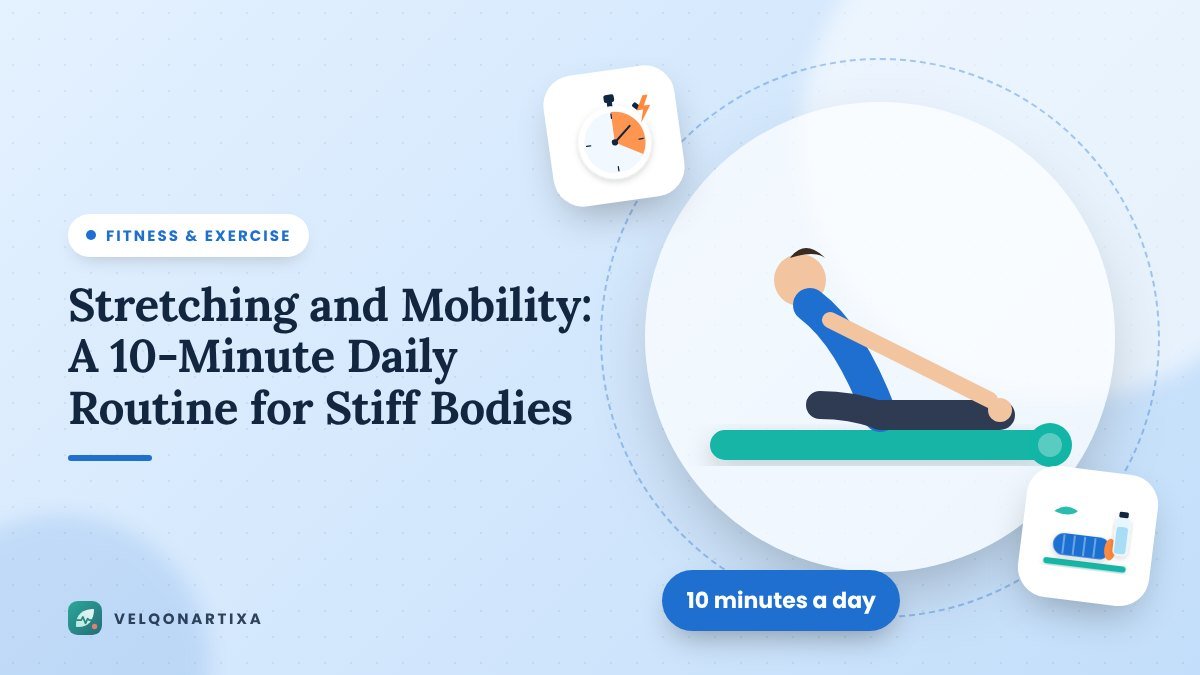
Feel less stiff with this 10-minute daily stretching and mobility routine. Learn the difference between static and dynamic stretching, plus safety tips.
Key takeaways
- Use dynamic (moving) stretches before exercise and static (held) stretches after exercise or as a standalone routine.
- Hold static stretches for about 15–30 seconds without bouncing.
- Stretching should feel like mild tension, never sharp pain.
- A short daily routine can ease stiffness from sitting and help you move more comfortably.
If you spend much of your day sitting at a desk, in a car, or on the couch, you've probably felt it: tight hips, a stiff lower back, and shoulders creeping toward your ears. Regular stretching and mobility work can help you move more freely and feel better throughout the day.
This simple 10-minute routine requires no equipment and can be done in your living room.
Flexibility vs. mobility: what's the difference?
- Flexibility is the ability of a muscle to lengthen.
- Mobility is the ability of a joint to move actively through its full range of motion.
Both matter for everyday comfort. Stretching improves flexibility, while gentle movement drills improve mobility.
Static vs. dynamic stretching
| Type | What it is | Best time |
|---|---|---|
| Dynamic | Controlled movements through a range of motion (leg swings, arm circles) | Before exercise, as part of a warm-up |
| Static | Holding a stretch in one position for 15–30 seconds | After exercise, or as a separate routine when muscles are warm |
Research suggests that long static stretches right before high-power activities, like sprinting, may slightly reduce performance. That's why a dynamic warm-up is better before workouts.
The 10-minute daily routine
Move slowly, breathe deeply, and stretch only to the point of mild tension. Hold static stretches for about 20 to 30 seconds per side.
1. Neck release (1 minute)
Sit or stand tall. Gently tilt your right ear toward your right shoulder and hold. Repeat on the left. Then slowly lower your chin toward your chest.
2. Shoulder rolls and chest opener (1 minute)
Roll your shoulders backward 10 times. Then clasp your hands behind your back (or hold a towel), lift your chest, and gently draw your shoulder blades together.
3. Cat-cow (1 minute)
On hands and knees, inhale as you drop your belly and lift your head (cow). Exhale as you round your back and tuck your chin (cat). Repeat slowly 8 to 10 times. This is great for spinal mobility.
4. Child's pose (1 minute)
From hands and knees, sit your hips back toward your heels and reach your arms forward. Rest your forehead on the floor or a pillow. Breathe into your back.
5. Hip flexor stretch (2 minutes)
Kneel on your right knee with your left foot in front, knee bent at 90 degrees. Tuck your pelvis slightly and shift your weight forward until you feel a stretch in the front of your right hip. Hold, then switch sides. This counters the tightness from sitting.
6. Seated hamstring stretch (1 minute)
Sit with one leg straight and the other bent. Hinge forward from your hips, keeping your back long, and reach toward your extended foot. Switch sides.
7. Figure-four glute stretch (2 minutes)
Lie on your back with knees bent. Cross your right ankle over your left knee. Gently pull your left thigh toward your chest. Hold, then switch.
8. Thoracic rotation (1 minute)
Lie on your side with knees bent and arms extended in front. Keeping your knees together, open your top arm across your body toward the floor behind you, following it with your eyes. Return and repeat 5 times per side.
Pair your routine with a daily cue, such as after your morning coffee or before bed, to turn it into a habit.
Tips for safe, effective stretching
- Warm up first with a few minutes of walking or marching if you're stretching cold muscles.
- Never bounce. Ballistic bouncing can strain muscles.
- Breathe slowly. Exhaling helps muscles relax.
- Be consistent. Gains in flexibility come from regular practice over weeks.
- Respect your limits. Everyone's range of motion is different.
Other ways to improve flexibility and mobility
- Yoga and tai chi: both improve flexibility, balance, and stress levels.
- Movement breaks: stand up and move for a few minutes every 30 to 60 minutes of sitting.
- Foam rolling: may help reduce muscle tightness and soreness.
When to see a professional
Talk to your doctor or a physical therapist if you have:
- Pain that lasts more than a few days or gets worse
- Joint swelling, numbness, or tingling
- Stiffness that significantly limits daily activities
- A recent injury or surgery
If you have osteoporosis, ask before doing deep forward bends or twisting movements, which may not be safe for weakened bones.
The bottom line
Just 10 minutes of stretching and mobility work each day can help you feel less stiff and move more comfortably. Keep it gentle, stay consistent, and pair it with regular activity like walking for the best results.
Last reviewed and updated: July 24, 2026
This article is for general information only. It isn't medical advice and can't replace a visit with your doctor, pharmacist, or other licensed health professional who knows your history. Read our full medical disclaimer.