Walking for Health: How to Turn Daily Steps Into Real Fitness Gains
Walking is one of the easiest ways to improve your health. Learn how many steps you need, how to walk briskly, proper form, and ways to make walks more effective.
Key takeaways
- Brisk walking (about 3 mph or faster) counts as moderate-intensity exercise.
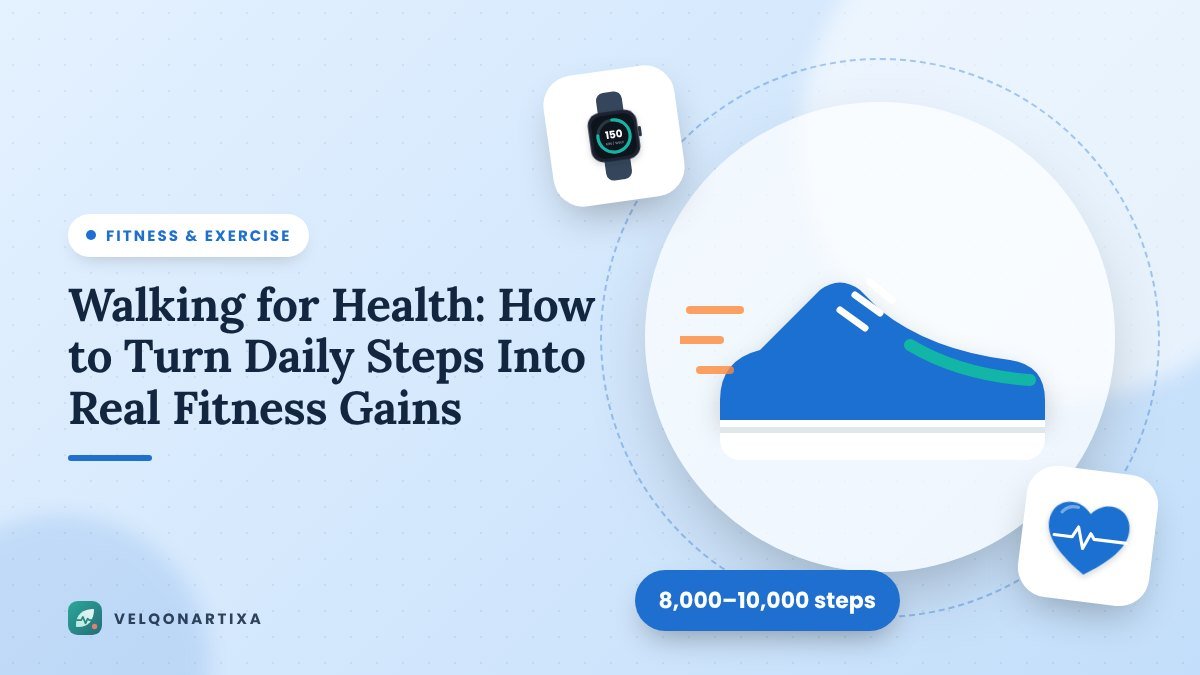
- Research links higher daily step counts with lower risk of early death, with benefits leveling off around 8,000–10,000 steps for many adults.
- Good posture, an active arm swing, and supportive shoes make walking more comfortable and effective.
- Intervals, hills, and walking after meals can boost the benefits.
Walking may be the most underrated form of exercise. It's free, requires no special skills, and can be done almost anywhere. It's also one of the most researched activities in health science, with benefits for your heart, brain, blood sugar, joints, and mood.
Here's how to make your walks count.
The health benefits of walking
Regular walking is associated with:
- Lower risk of heart disease and stroke
- Better blood pressure and cholesterol levels
- Improved blood sugar control and lower risk of type 2 diabetes
- Stronger bones and muscles
- Better mood and less stress, anxiety, and depression
- Improved sleep and energy
- Healthy weight management
How many steps do you really need?
The famous "10,000 steps" goal actually started as a marketing slogan for a Japanese pedometer in the 1960s. Since then, scientists have studied step counts more closely.
Large studies, including research supported by the National Institutes of Health, have found that taking more steps per day is linked with a lower risk of death from all causes. For many adults, the benefits appear to level off around 8,000 to 10,000 steps per day, and for older adults, around 6,000 to 8,000 steps. Even modest increases help: going from 4,000 to 6,000 steps a day is a meaningful improvement.
Don't get stuck on a single number. If you average 3,000 steps today, aim for 4,000 next week. Progress is what counts.
Walking briskly: the key to fitness gains
A slow stroll is good for you, but brisk walking delivers more fitness benefits. Brisk walking is generally about 3 miles per hour or faster (roughly 100 steps per minute or more). At that pace, you should be able to talk but not sing.
Thirty minutes of brisk walking, five days a week, meets the federal guideline of 150 minutes of moderate activity.
Proper walking form
Good technique makes walking more comfortable and efficient:
- Head up, eyes looking forward about 10 to 20 feet ahead
- Shoulders relaxed, down and back
- Arms bent at about 90 degrees, swinging naturally from the shoulders
- Core lightly engaged, standing tall
- Heel strikes first, then roll through to push off with your toes
- Take natural steps; to go faster, take quicker steps rather than longer ones
Choosing the right shoes
Look for walking or running shoes with good arch support, a cushioned heel, and a flexible forefoot. Shop late in the day when your feet are slightly larger, and replace shoes every 300 to 500 miles or when the soles look worn.
7 ways to get more from your walks
- Add intervals: Alternate 1 to 3 minutes of fast walking with 2 to 3 minutes at a comfortable pace.
- Find hills: Walking uphill strengthens your legs and raises your heart rate.
- Walk after meals: Even a 10- to 15-minute walk after eating can help lower blood sugar spikes.
- Use your arms: An active arm swing increases calorie burn and speed.
- Try Nordic walking poles: They engage the upper body and can improve stability.
- Walk with a friend: Social walks are more enjoyable and help you stay consistent.
- Explore new routes: Parks, trails, and different neighborhoods keep walking interesting.
Fitting more steps into your day
- Take the stairs instead of the elevator.
- Park farther from store entrances.
- Take walking meetings or pace during phone calls.
- Walk the dog an extra block.
- Set a reminder to stand up and move every hour.
Staying safe
- Walk in well-lit areas and wear bright or reflective clothing at night.
- Stay hydrated, especially in hot weather.
- Dress in layers in cold weather and watch for ice.
- Carry your phone and ID.
- If you have arthritis, heart disease, or diabetes, ask your doctor how to start safely. People with diabetes should check their feet daily for blisters or sores.
Stop walking and get help if you feel chest pain, severe shortness of breath, or dizziness. Call 911 if symptoms are severe or don't go away with rest.
The bottom line
Walking is a simple, powerful way to improve your health at any age. Start where you are, gradually increase your steps and pace, and make it a daily habit you enjoy. Your body and mind will thank you.
Last reviewed and updated: August 22, 2026
This article is for general information only. It isn't medical advice and can't replace a visit with your doctor, pharmacist, or other licensed health professional who knows your history. Read our full medical disclaimer.