Fiber 101: Why Most Americans Fall Short and 15 Easy Ways to Eat More
Most Americans eat only about half the fiber they need. Discover why fiber matters for your heart, gut, and blood sugar, plus 15 simple ways to eat more.
Key takeaways
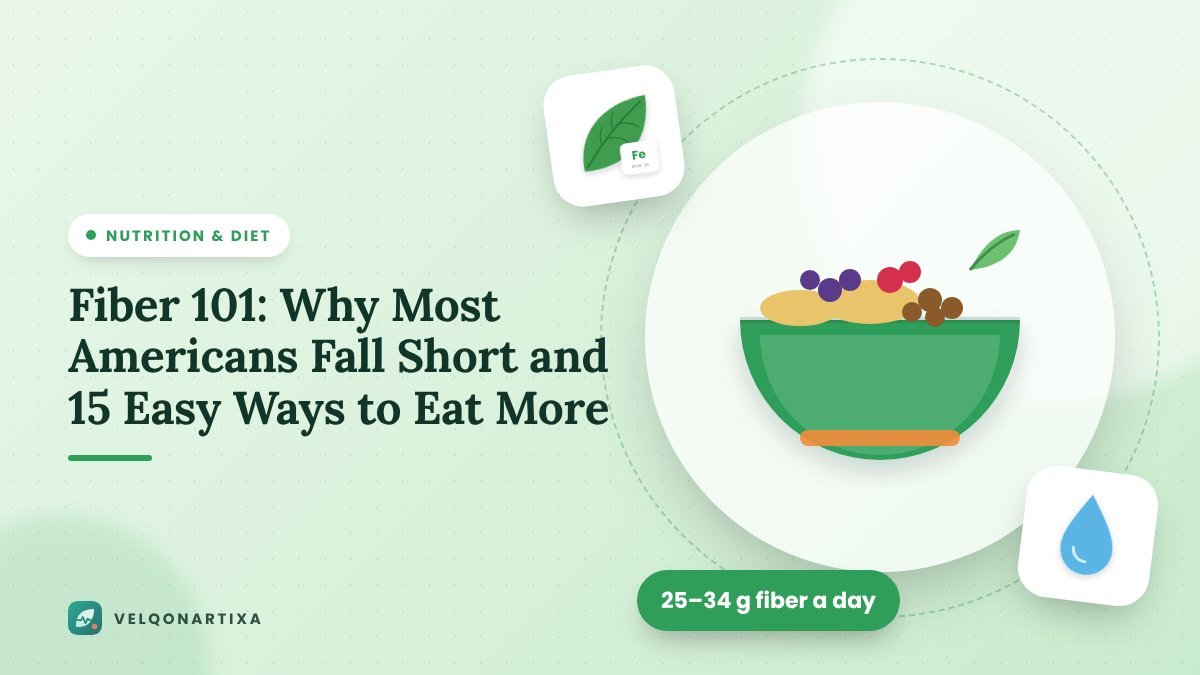
- Adults generally need about 22 to 34 grams of fiber per day, depending on age and sex, but most Americans eat around 15 grams.
- Fiber supports digestion, helps lower LDL cholesterol, steadies blood sugar, and helps you feel full.
- Beans, lentils, berries, whole grains, nuts, and vegetables are the richest sources.
- Increase fiber gradually and drink more water to avoid gas and bloating.
Fiber is one of the most underrated nutrients in the American diet. It doesn't get the attention that protein does, yet it plays a role in nearly every system that keeps you healthy, from your heart to your gut. The problem? According to national nutrition surveys, more than 90% of women and 97% of men in the U.S. don't eat enough of it.
The good news is that closing the fiber gap is easy once you know where to look.
What is fiber?
Dietary fiber is the part of plant foods your body can't fully digest. Instead of being absorbed, it moves through your digestive system and does important work along the way. There are two main types:
- Soluble fiber dissolves in water to form a gel. It helps lower LDL ("bad") cholesterol and slows the absorption of sugar. Sources include oats, beans, apples, citrus fruits, and barley.
- Insoluble fiber adds bulk to stool and helps food move through your digestive tract. Sources include whole-wheat products, nuts, and the skins of many vegetables and fruits.
Most plant foods contain a mix of both, so you don't need to track them separately.
How much fiber do you need?
The Dietary Guidelines for Americans recommend about 14 grams of fiber for every 1,000 calories you eat. For most adults, that works out to:
| Group | Daily fiber target |
|---|---|
| Women 19–50 | About 25–28 grams |
| Men 19–50 | About 31–34 grams |
| Women 51+ | About 22 grams |
| Men 51+ | About 28 grams |
Why fiber matters
- Heart health: Soluble fiber can help lower LDL cholesterol, a major risk factor for heart disease.
- Blood sugar control: Fiber slows digestion, which helps prevent sharp spikes in blood sugar after meals.
- Digestive health: Fiber helps prevent constipation and feeds the beneficial bacteria in your gut.
- Fullness and weight management: High-fiber foods are filling, so they can help you eat less without feeling hungry.
- Long-term health: Diets rich in fiber are linked with a lower risk of heart disease, type 2 diabetes, and colorectal cancer.
15 easy ways to eat more fiber
- Switch to a whole-grain breakfast cereal with at least 5 grams of fiber per serving.
- Choose oatmeal instead of a pastry. Top it with berries for an extra boost.
- Add beans to everything: soups, salads, tacos, and pasta sauces. Half a cup of black beans has about 7 to 8 grams of fiber.
- Swap white bread for 100% whole-wheat bread.
- Eat the skins on potatoes, apples, and pears.
- Snack on raspberries or blackberries. One cup of raspberries has about 8 grams.
- Keep nuts and seeds handy. Almonds, pistachios, and chia seeds are fiber-rich.
- Sprinkle ground flaxseed or chia into yogurt, smoothies, or oatmeal.
- Make brown rice, farro, or quinoa your default grain.
- Add a vegetable to every meal, even breakfast. Spinach in eggs counts.
- Choose hummus and veggies instead of chips and dip.
- Try lentil soup. Lentils cook quickly and have about 8 grams of fiber per half cup.
- Pick popcorn (air-popped or lightly seasoned) as a whole-grain snack.
- Eat whole fruit instead of juice. Juicing removes most of the fiber.
- Read the label. A food with 5 grams or more of fiber per serving is considered an excellent source.
Increase fiber slowly, adding a few grams every few days. Going from 15 to 30 grams overnight can cause gas, cramping, and bloating.
Drink more water as you add fiber
Fiber works best when it has fluid to absorb. As you increase your intake, drink more water throughout the day. Without enough fluid, a high-fiber diet can actually make constipation worse.
What about fiber supplements?
Psyllium and other fiber supplements can help some people, especially with constipation or cholesterol, when recommended by a health professional. But whole foods provide vitamins, minerals, and plant compounds that supplements can't match. Talk with your doctor or pharmacist before starting a supplement, because fiber can affect how some medications are absorbed.
When to talk to a doctor
See your health care provider if you have ongoing changes in bowel habits, blood in your stool, unexplained weight loss, or severe abdominal pain. People with certain digestive conditions, such as inflammatory bowel disease or a history of bowel obstruction, may need individualized fiber advice.
The bottom line
Most Americans could benefit from eating more fiber. Start with one or two easy swaps, such as oatmeal for breakfast or beans in your dinner, and build from there. Your heart, gut, and appetite will thank you.
Last reviewed and updated: September 23, 2026
This article is for general information only. It isn't medical advice and can't replace a visit with your doctor, pharmacist, or other licensed health professional who knows your history. Read our full medical disclaimer.