How to Read a Nutrition Facts Label Like a Pro
A step-by-step guide to reading the FDA Nutrition Facts label: serving sizes, calories, % Daily Value, added sugars, sodium, and the nutrients to get more of.
Key takeaways
- Always start with the serving size and servings per container; every number on the label is based on one serving.
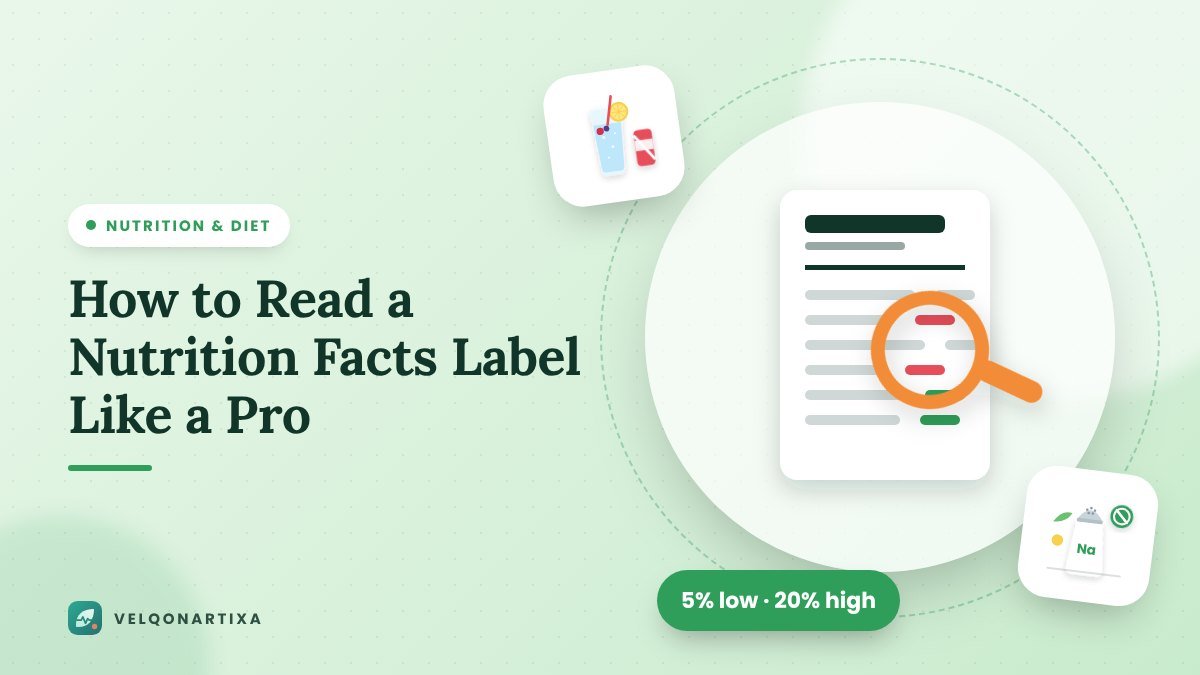
- Use % Daily Value as a quick gauge: 5% or less is low, and 20% or more is high.
- Aim lower on added sugars, sodium, and saturated fat, and higher on fiber, vitamin D, calcium, potassium, and iron.
- The ingredient list is in order by weight, so the first few ingredients matter most.
Every packaged food in the United States carries a Nutrition Facts label, but many shoppers glance at the calories and move on. Learning to read the full label takes just a few minutes and can help you make better choices in seconds at the grocery store.
The U.S. Food and Drug Administration (FDA) updated the label in recent years to make it easier to use: bigger calorie numbers, realistic serving sizes, and a separate line for added sugars. Here's how to read it from top to bottom.
Step 1: Check the serving size
At the top of the label, you'll see Servings per container and Serving size. Every number below is based on one serving.
This is where many people get tripped up. A 20-ounce bottle of soda or a large bag of chips may contain two or more servings. If you eat the whole package, multiply everything on the label accordingly. The updated label often shows a "per container" column for packages people usually finish in one sitting.
Step 2: Look at calories
Calories tell you how much energy you get from one serving. The FDA uses 2,000 calories a day as a general reference, but your needs may be higher or lower depending on your age, sex, size, and activity level.
Step 3: Use the % Daily Value (%DV)
The %DV column shows how much a nutrient in one serving contributes to a total daily diet. It's a quick way to judge whether a food is high or low in something, without doing math.
The 5/20 rule: 5% DV or less is considered low. 20% DV or more is considered high.
Use it to compare similar products. For example, if one soup has 35% DV for sodium and another has 15%, the second is the better pick for your heart.
Step 4: Nutrients to get less of
Saturated fat
Diets high in saturated fat are linked with higher LDL cholesterol. Look for lower %DV numbers, especially in meats, cheeses, baked goods, and frozen meals.
Sodium
Most Americans eat far more sodium than recommended, and about 70% of it comes from packaged and restaurant foods. The Daily Value is 2,300 mg. Foods like bread, deli meat, soups, and sauces can add up quickly.
Added sugars
The label separates Total Sugars (including natural sugars in fruit and milk) from Added Sugars (sugars put in during processing, such as table sugar, syrups, and honey). Added sugars are the ones to watch. The Daily Value is 50 grams, but less is better.
Trans fat
Artificial trans fats have largely been removed from the U.S. food supply. Still, if you see "partially hydrogenated oil" in an ingredient list, skip it.
Step 5: Nutrients to get more of
Many Americans don't get enough of these, so higher %DV numbers are a plus:
- Dietary fiber: supports digestion, heart health, and blood sugar control
- Vitamin D: important for bones and muscles
- Calcium: supports bone health
- Potassium: helps balance the effects of sodium on blood pressure
- Iron: helps carry oxygen in your blood
Step 6: Read the ingredient list
Ingredients are listed in order by weight, from most to least. A few tips:
- If sugar, in any form, appears in the first three ingredients, the product is likely high in added sugar. Watch for names like corn syrup, cane sugar, dextrose, maltose, and fruit juice concentrate.
- For whole-grain products, look for the word "whole" in the first ingredient.
- Check for allergens. U.S. law requires that major food allergens, including milk, eggs, fish, shellfish, tree nuts, peanuts, wheat, soy, and sesame, be clearly identified.
Decoding front-of-package claims
Claims like "natural," "made with real fruit," or "multigrain" can sound healthy but don't always mean much. A few terms do have FDA definitions:
| Claim | What it means |
|---|---|
| Low sodium | 140 mg or less per serving |
| Low fat | 3 grams or less per serving |
| High fiber | 5 grams or more per serving |
| Reduced sugar | At least 25% less sugar than the regular product |
When in doubt, turn the package over and check the Nutrition Facts label yourself.
A quick 30-second label routine
- Serving size: how much am I really eating?
- Added sugars, sodium, saturated fat: are they 5% or 20%?
- Fiber and key nutrients: is this a good source?
- Ingredients: what's in the first three spots?
The bottom line
The Nutrition Facts label is one of the most useful free tools in the grocery store. With a little practice, you'll be able to compare products quickly and fill your cart with foods that support your health. Pair your label skills with our guide on building a balanced plate.
Last reviewed and updated: August 25, 2026
This article is for general information only. It isn't medical advice and can't replace a visit with your doctor, pharmacist, or other licensed health professional who knows your history. Read our full medical disclaimer.