How to Build a Balanced Plate: A Simple Guide to the MyPlate Method
Learn how to build a balanced plate using the USDA MyPlate method, with easy portion tips, smart swaps, and sample meals for busy American households.
Key takeaways
- Fill about half your plate with fruits and vegetables, a quarter with grains (ideally whole), and a quarter with protein.
- Add a serving of dairy or a fortified soy alternative, and choose water most of the time.
- You don't need to weigh food; your hand and a standard 9-inch plate are good portion guides.
- Balance across the whole day matters more than making every single meal perfect.
Healthy eating advice can feel complicated: count this, avoid that, try the latest trend. The USDA's MyPlate model cuts through the noise with one simple visual. If you can picture a dinner plate, you can build a balanced meal.
This guide walks you through the method, shows realistic examples, and explains how to adjust it for your own tastes, budget, and health goals.
What is the MyPlate method?
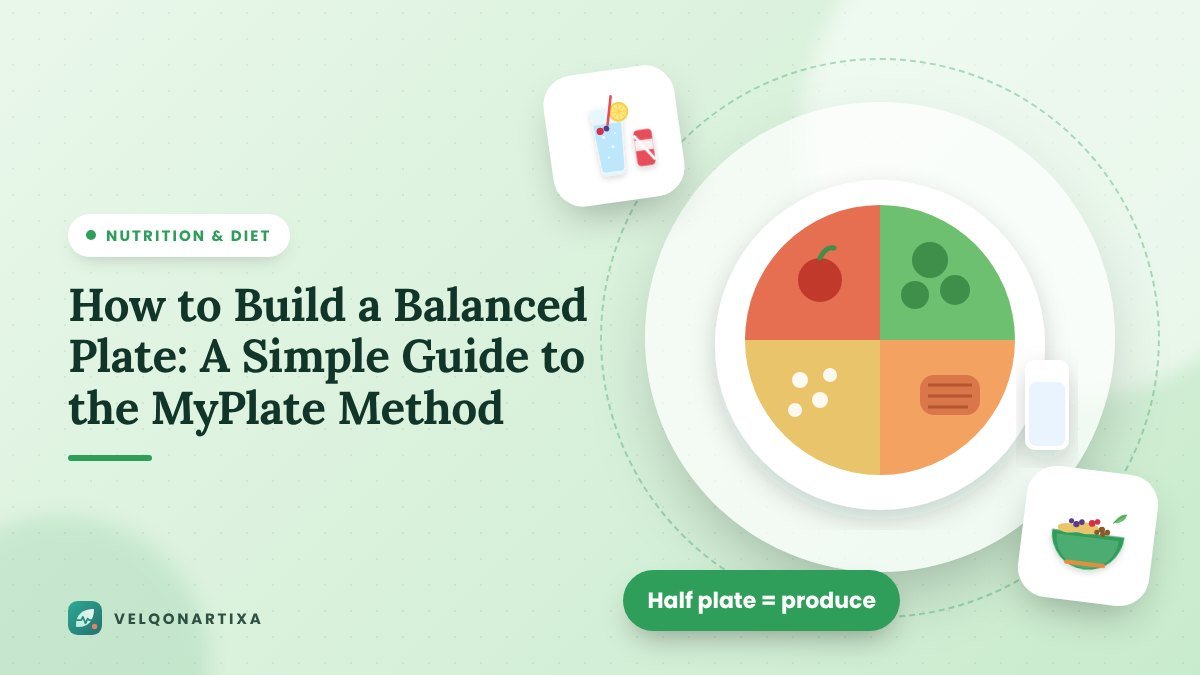
MyPlate is the federal government's visual guide to the Dietary Guidelines for Americans. It replaced the old food pyramid in 2011 because a plate is easier to picture at mealtime. The plate is divided into four sections, with a side of dairy:
- Vegetables: the largest section, a bit more than a quarter of the plate
- Fruits: a bit less than a quarter
- Grains: about a quarter, with at least half of your grains being whole grains
- Protein: about a quarter, from a variety of sources
- Dairy: a cup of milk, yogurt, or a calcium-fortified soy alternative on the side
Together, fruits and vegetables make up roughly half of what you eat. That single idea, "make half your plate produce," is the most important takeaway.
Step-by-step: building your plate
1. Start with vegetables
Choose a mix of colors over the week: dark greens like spinach and broccoli, red and orange vegetables like carrots and bell peppers, beans and peas, and starchy vegetables like corn or potatoes in moderation. Frozen and canned vegetables count. Look for "no salt added" cans when you can.
2. Add fruit
Whole fruit, whether fresh, frozen, or canned in water or 100% juice, gives you fiber that juice lacks. Berries on oatmeal or an apple with lunch makes this easy.
3. Pick a grain, and make it whole when you can
Brown rice, whole-wheat pasta, oats, quinoa, and whole-grain bread keep you fuller than refined versions. A useful label check: the first ingredient should say "whole" (for example, "whole wheat flour").
4. Choose a protein
Rotate through seafood, poultry, lean meats, eggs, beans, lentils, tofu, nuts, and seeds. The Dietary Guidelines suggest eating seafood about twice a week and limiting processed meats like bacon and deli meats.
5. Round it out with dairy and a drink
Low-fat or fat-free milk and yogurt provide calcium, vitamin D, and potassium. For drinks, water, unsweetened tea, or coffee are your best everyday choices.
Easy portion guides (no scale required)
| Food group | Hand-size guide | Example |
|---|---|---|
| Protein | Size of your palm | A chicken breast or a salmon fillet |
| Grains | One cupped hand | About 1/2 cup cooked rice or pasta |
| Vegetables | Two open handfuls | A big side salad or a pile of roasted veggies |
| Fats | Tip of your thumb | About 1 teaspoon of oil or butter |
Using a 9-inch plate instead of an oversized 12-inch plate is one of the simplest ways to right-size portions without feeling restricted.
What a balanced plate looks like in real life
Breakfast: Oatmeal topped with blueberries and a spoonful of peanut butter, plus a glass of milk.
Lunch: A whole-wheat wrap with turkey, spinach, tomatoes, and hummus, with baby carrots and an orange.
Dinner: Baked salmon, roasted broccoli and sweet potatoes, a scoop of brown rice, and a side salad.
Plant-based dinner: Black bean and vegetable tacos on corn tortillas with salsa, avocado, and a side of mango.
Notice that mixed dishes like stir-fries, soups, and casseroles still count. Just look at the overall proportions. If your pasta dish is mostly noodles, add a side of vegetables to balance it out.
Adjusting the plate to your needs
MyPlate is a starting point, not a strict rulebook. How much you need from each group depends on your age, sex, height, weight, and activity level. The free MyPlate Plan tool on MyPlate.gov gives personalized amounts.
Some situations call for professional guidance. If you have diabetes, kidney disease, food allergies, or are pregnant, ask your doctor for a referral to a registered dietitian nutritionist (RD or RDN), who can tailor the plate to your health needs. Many insurance plans, including Medicare for certain conditions, cover medical nutrition therapy.
Common mistakes to avoid
- Forgetting vegetables at breakfast and lunch. Most Americans fall short on vegetables. Adding a handful to eggs or a sandwich helps.
- Letting grains take over. Restaurant pasta and rice portions can fill half the plate or more.
- Drinking calories without noticing. Soda, sweet tea, and specialty coffee drinks can add hundreds of calories and lots of added sugar.
- Aiming for perfection. One unbalanced meal won't undo your progress. Think about the balance across your day and week.
The bottom line
Building a balanced plate doesn't require special foods or complicated math. Fill half your plate with fruits and vegetables, split the rest between whole grains and protein, add dairy, and drink water. Start with one meal a day, and the habit will grow from there.
For more practical ideas, see our guides on eating more fiber and beginner meal prep.
Sources & further reading
Last reviewed and updated: October 22, 2026
This article is for general information only. It isn't medical advice and can't replace a visit with your doctor, pharmacist, or other licensed health professional who knows your history. Read our full medical disclaimer.