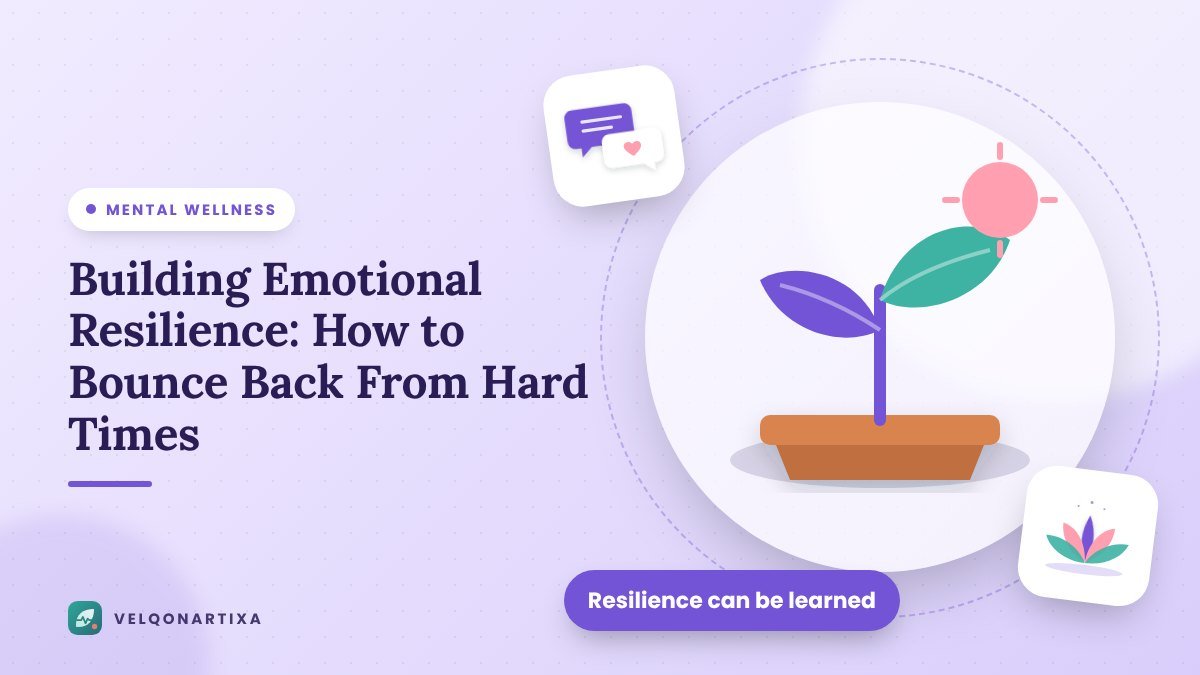
Building Emotional Resilience: How to Bounce Back From Hard Times
Resilience is a skill you can build. Learn what emotional resilience is and 10 practical ways to strengthen it through connection, self-care, and healthy thinking.
Key takeaways
- Resilience is the ability to adapt well to adversity, stress, and change, and it can be learned.
- Strong relationships are one of the most important foundations of resilience.
- Healthy thinking habits, self-care, and a sense of purpose all help you recover from setbacks.
- Being resilient doesn't mean handling everything alone; seeking help is part of resilience.
Life inevitably brings hard times: job loss, illness, a breakup, grief, financial strain. Resilience is what helps people adapt and keep going. And contrary to popular belief, it's not a trait you either have or don't have.
According to the American Psychological Association, resilience involves behaviors, thoughts, and actions that anyone can learn and develop.
What is emotional resilience?
Emotional resilience is the ability to adapt to adversity, trauma, stress, or significant change. Resilient people still feel sadness, anger, and fear. The difference is that they find ways to cope, recover, and sometimes even grow from difficult experiences.
The four pillars of resilience
The APA describes four core components that can help you build resilience:
- Connection: relationships that provide support
- Wellness: caring for your body and mind
- Healthy thinking: keeping perspective and managing negative thoughts
- Meaning: finding purpose and helping others
10 ways to build resilience
Build connection
1. Prioritize relationships. Reach out to people who care about you. Even a short phone call or coffee with a friend strengthens your support system.
2. Join a group. Faith communities, volunteer organizations, clubs, and support groups provide belonging and perspective.
Care for your wellness
3. Take care of your body. Regular exercise, nourishing food, and enough sleep give you the physical and emotional energy to cope. Even a daily walk helps.
4. Practice mindfulness. Mindfulness, journaling, prayer, or yoga can help you stay grounded. Try our 5-minute mindfulness practice.
5. Avoid unhealthy escapes. Alcohol, drugs, and other numbing behaviors may offer short-term relief but often make things harder over time.
Develop healthy thinking
6. Keep things in perspective. Ask yourself: "Will this matter in a year?" or "What would I tell a friend in this situation?"
7. Accept what you can't change. Focus your energy on what's within your control, such as your actions, responses, and next steps.
8. Challenge catastrophic thinking. When your mind jumps to the worst-case scenario, look for evidence and consider more realistic outcomes.
Find meaning
9. Set small, realistic goals. Doing one thing each day that moves you forward, even something small, builds a sense of control and progress.
10. Help others. Volunteering or supporting someone else can provide purpose and remind you of your strengths.
Try a nightly "three good things" exercise: write down three things that went well today and why. Research suggests this simple practice can boost well-being over time.
Learning from past challenges
Think about a difficult time you've already gotten through. Ask yourself:
- What helped me cope then?
- Who did I turn to for support?
- What did I learn about myself?
- What strengths did I use?
Recognizing the resilience you've already shown can give you confidence in facing current challenges.
Resilience doesn't mean going it alone
Being resilient doesn't mean you never need help. In fact, knowing when to reach out is one of the most important resilience skills. Consider talking with a mental health professional if:
- You feel stuck or unable to function in daily life
- Grief, sadness, or anxiety isn't easing over time
- You've experienced trauma
- You're using alcohol or substances to cope
Our guide on how to find a therapist can help you get started.
If you're in crisis, call or text 988 to reach the 988 Suicide & Crisis Lifeline, available 24/7. If you or someone else is in immediate danger, call 911.
The bottom line
Resilience is like a muscle: it grows stronger with practice. By nurturing relationships, caring for your health, practicing healthy thinking, and finding meaning, you can better weather life's storms and come through them with new strength.
Last reviewed and updated: May 24, 2026
This article is for general information only. It isn't medical advice and can't replace a visit with your doctor, pharmacist, or other licensed health professional who knows your history. Read our full medical disclaimer.