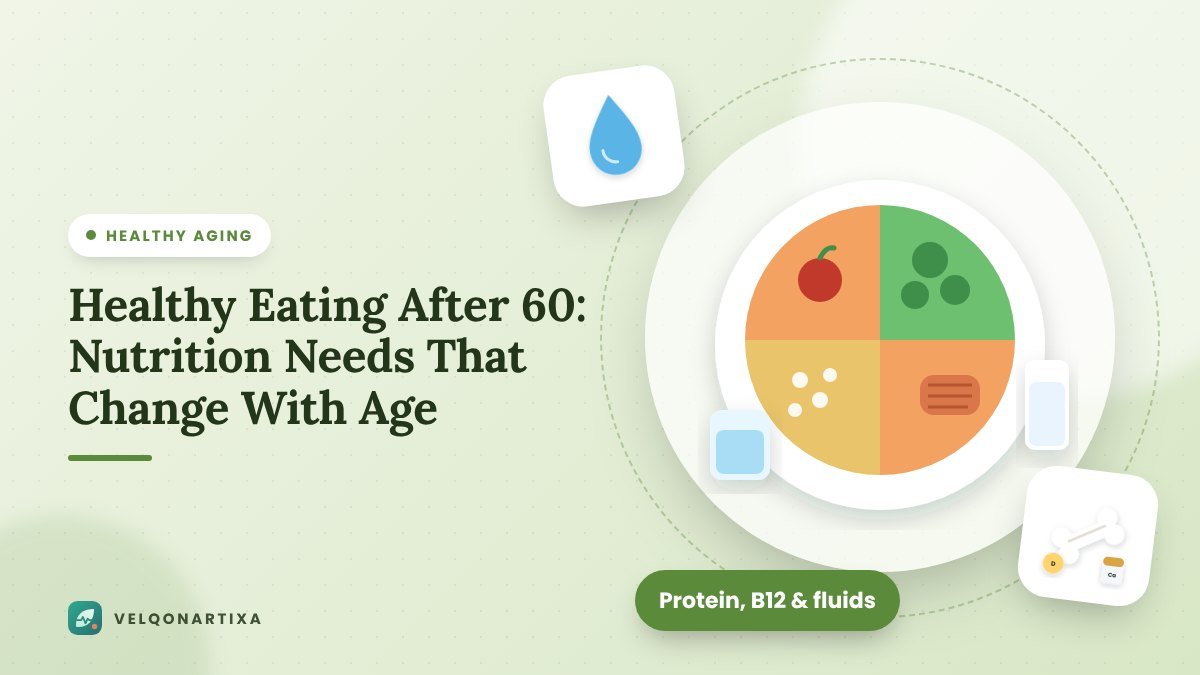
Healthy Eating After 60: Nutrition Needs That Change With Age
Nutritional needs change as you age. Learn the key nutrients older adults need more of, tips for appetite and hydration, and practical healthy eating strategies.
Key takeaways
- Older adults often need fewer calories but the same or more of certain nutrients, making nutrient-dense foods important.
- Key nutrients to focus on include protein, calcium, vitamin D, vitamin B12, fiber, and potassium.
- The sense of thirst declines with age, so drinking fluids regularly is important.
- Unintended weight loss or poor appetite should be discussed with a doctor.
As we age, our bodies change, and so do our nutritional needs. Older adults generally need fewer calories because metabolism slows and activity levels may decrease. But the need for many nutrients stays the same or even increases. That means every bite counts.
Eating well after 60 can help you maintain energy, muscle strength, bone health, and independence, and lower your risk of chronic diseases.
Why nutrition needs change
- Slower metabolism and less muscle mass mean fewer calories are needed
- Reduced absorption of some nutrients, like vitamin B12
- Changes in taste and smell can reduce appetite
- Dental problems can make chewing difficult
- Medications may affect appetite or nutrient absorption
- Reduced sense of thirst increases dehydration risk
Key nutrients for older adults
Protein
Protein helps maintain muscle mass, which naturally declines with age. Many experts suggest older adults may benefit from slightly more protein than younger adults, spread throughout the day.
Sources: fish, poultry, lean meat, eggs, Greek yogurt, cottage cheese, beans, lentils, tofu, and nuts. Learn more in how much protein do you need.
Calcium and vitamin D
These work together to keep bones strong and reduce fracture risk.
| Nutrient | Women 51+ | Men 51–70 | Men 71+ |
|---|---|---|---|
| Calcium | 1,200 mg | 1,000 mg | 1,200 mg |
| Vitamin D | 600 IU (800 IU at 71+) | 600 IU | 800 IU |
Sources: low-fat dairy, fortified plant milks and cereals, canned salmon or sardines with bones, leafy greens, and fortified orange juice.
Vitamin B12
Many older adults absorb less B12 from food because of reduced stomach acid. Certain medications, such as metformin and acid reducers, can also lower B12 levels. A deficiency can cause fatigue, anemia, numbness, and memory problems.
Sources: fish, meat, eggs, dairy, and fortified cereals. The Dietary Guidelines note that older adults may benefit from fortified foods or supplements. Ask your doctor about testing.
Fiber
Fiber supports digestion, prevents constipation, and helps manage cholesterol and blood sugar. Adults over 50 should aim for about 22 grams (women) to 28 grams (men) per day. See our fiber guide.
Potassium
Potassium supports healthy blood pressure. Sources: bananas, potatoes, beans, yogurt, tomatoes, and leafy greens. (People with kidney disease may need to limit potassium; ask your doctor.)
Don't forget hydration
The sense of thirst declines with age, and some medications increase fluid loss. Dehydration can cause confusion, dizziness, constipation, and urinary tract infections.
Tips:
- Drink water regularly throughout the day, even if you're not thirsty
- Keep a water bottle within reach
- Eat water-rich foods like soups, fruits, and vegetables
- Check your urine: pale yellow is a sign of good hydration
Practical healthy eating tips
- Fill half your plate with fruits and vegetables. See our balanced plate guide.
- Choose whole grains over refined grains.
- Limit sodium, added sugars, and saturated fat.
- Use herbs and spices to boost flavor if taste has declined.
- Eat with others when possible; shared meals can improve appetite and enjoyment.
- Keep easy, healthy foods on hand: canned beans and fish, frozen vegetables, oatmeal, eggs, and yogurt.
- Try softer foods if chewing is difficult: smoothies, soups, stews, and cooked vegetables.
Help with food access
If cost, transportation, or cooking are barriers, help is available:
- SNAP (Supplemental Nutrition Assistance Program)
- Meals on Wheels and other home-delivered meal programs
- Congregate meal programs at senior centers
- Senior Farmers' Market Nutrition Program
Call the Eldercare Locator at 1-800-677-1116 or visit eldercare.acl.gov to find services near you.
A simple, nutritious, no-cook lunch: whole-grain crackers, canned salmon, cherry tomatoes, cucumber slices, and a container of yogurt.
When to talk to a doctor
See your health care provider or ask for a referral to a registered dietitian if you experience:
- Unintended weight loss (for example, 5% of your body weight in 6 to 12 months)
- Poor appetite for more than a few days
- Trouble chewing or swallowing
- Ongoing digestive problems
- Concerns about how medications affect your diet
Medicare covers medical nutrition therapy for people with diabetes or kidney disease.
The bottom line
Healthy eating after 60 is about getting more nutrition from fewer calories. Focus on protein, calcium, vitamin D, B12, fiber, and hydration, and don't hesitate to seek help if eating well becomes a challenge.
Last reviewed and updated: June 3, 2026
This article is for general information only. It isn't medical advice and can't replace a visit with your doctor, pharmacist, or other licensed health professional who knows your history. Read our full medical disclaimer.